
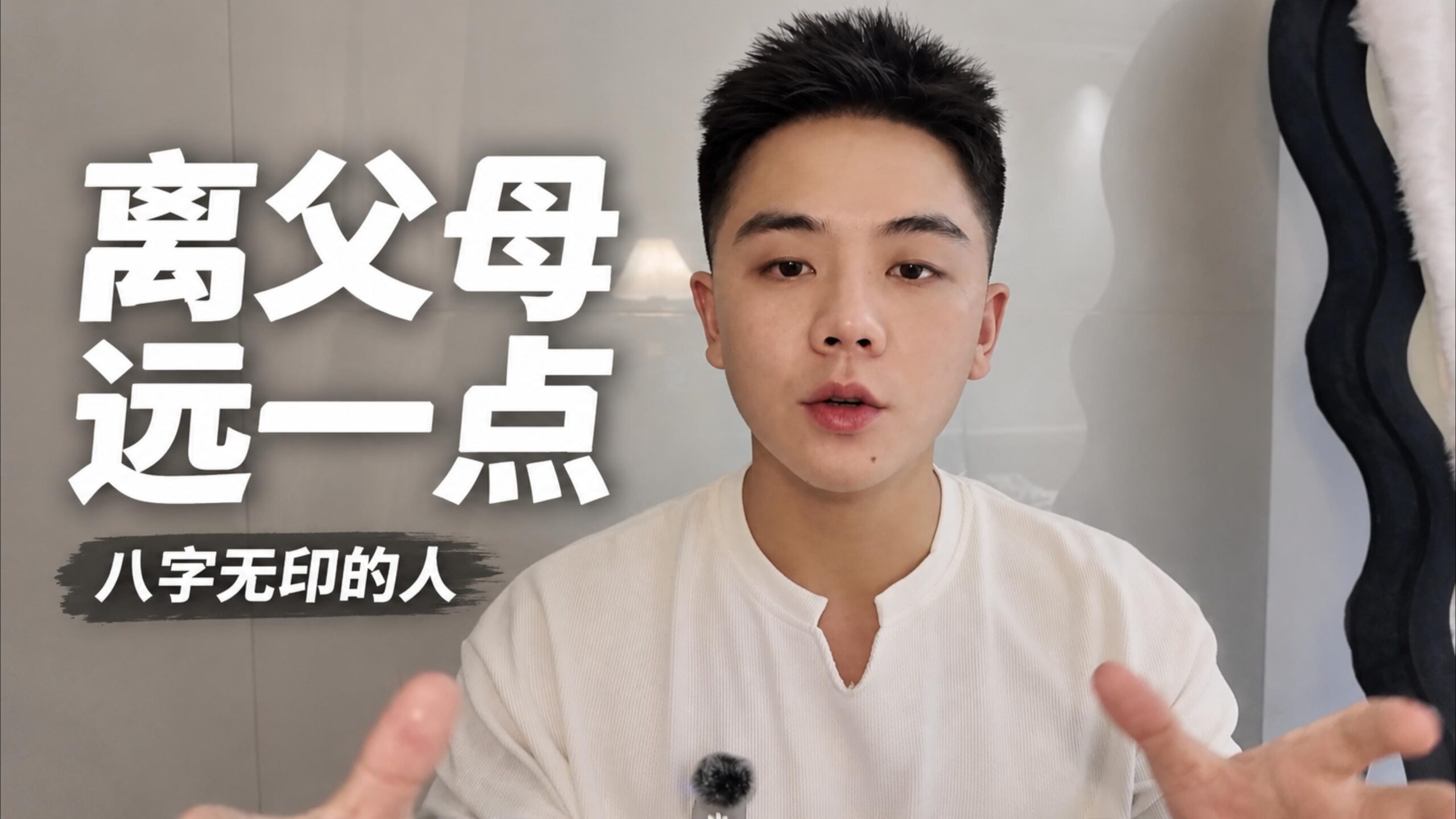
If Your Bazi Has No Yin Xing (印星), You May Be Better Off Living Away From Your Parents
Some people grow up knowing that their parents will always have their back. Others grow up learning that, when things go wrong, they can only rely on themselves.
If you need money, your parents transfer it to you. If you run into trouble, they help you figure things out. You don’t have to prove yourself first. You don’t have to earn their support. You know they’re there.
But not everyone grows up with that kind of safety net.
Some people have to understand their parents’ difficulties from an early age. They learn not to ask for too much. They become independent before they’re ready, not because they want to be, but because there is nobody else to rely on.
From the perspective of Bazi (八字), one concept I pay attention to when discussing this kind of experience is Yin Xing (印星).
If your Bazi chart has no Yin Xing, or your Yin Xing is extremely weak and unable to function effectively, my advice is simple: you may be better off creating some distance between yourself and your parents.
Not because you should hate them. Not because they are necessarily bad people.
But because sometimes, accepting what your parents cannot give you is the first step toward building a better life.
What Does Yin Xing (印星) Mean in Bazi?
In Bazi, Yin Xing (印星), often translated as the Resource Star, is traditionally associated with support, protection, learning, and the resources a person receives from others.
To me, one of its most important symbolic meanings is unconditional support.
It’s the kind of support you don’t have to beg for. You don’t have to keep someone happy to receive it. You don’t have to prove that you’re successful or useful before they agree to help you.
When you’re in trouble, someone is simply willing to stand behind you.
For a child, this kind of support often comes from their parents.
You run into a problem, and you call home. You don’t have enough money, and your parents help you out. You face an important decision, and they give you advice or help you find a way forward.
You know that even if things don’t go well, you have somewhere to turn.
But what happens when you grow up without that experience?
In Bazi analysis, the presence, condition, and role of Yin Xing are among the factors that may be considered when examining a person’s relationship with support, family, and parents.
If Yin Xing is absent, extremely weak, or unable to function effectively in the overall chart, I would pay attention to whether the person has had to rely on themselves from an early age.
Of course, a chart cannot tell you everything about someone’s childhood. Having no Yin Xing does not automatically mean that your parents don’t love you or that they will never help you. The whole chart and your actual life circumstances matter.
But if your real-life experience matches this pattern, there is something worth thinking about.
Maybe you’ve spent years waiting for your parents to understand you, support you, or finally give you the kind of care you’ve always wanted.
Maybe you’ve tried so hard to become successful because you want to prove to them that you can make it.
And maybe, deep down, you’re still hoping that one day they’ll finally treat you differently.
That’s where things can get exhausting.
Some People Have to Learn to Rely on Themselves Early
Some people grow up with parents who can provide money, connections, advice, and a sense of security.
Others grow up having to figure everything out on their own.
They learn to be considerate of their parents’ difficulties. They learn not to ask for too much. Sometimes, they even become the person who takes care of their parents emotionally.
Instead of being supported, they spend their childhood trying to understand why their parents cannot support them.
As adults, they may still carry that habit into their relationships.
They hesitate to ask for help. They feel guilty about needing anything. They keep trying to prove that they’re capable, even when they’re exhausted.
And when their parents fail to offer support, they blame themselves.
They think they haven’t done enough. They think they haven’t become successful enough. They think that if they could just do better, maybe their parents would finally recognize their worth.
But sometimes, the problem isn’t that you haven’t tried hard enough.
Sometimes, your parents simply don’t have what you need.
They may lack money. They may lack emotional maturity. They may have unresolved problems of their own. They may not know how to support you, even if they believe they are doing their best.
Some parents are struggling to manage their own lives. Expecting them to provide the stability you need may be unrealistic.
That doesn’t necessarily make them terrible people.
It means they have limitations.
And recognizing those limitations can save you years of disappointment.
Why Living Away From Your Parents May Help
When I say that people with no Yin Xing may be better off living away from their parents, I’m not telling you to hate your family or start a conflict.
I’m talking about recognizing reality and creating a life that works better for you.
Sometimes, living together creates tension on both sides.
You may have experienced this yourself. You go home for a few days, and before long, everyone starts getting annoyed with each other.
Your parents have their habits and expectations. You have your own way of living. Small disagreements turn into arguments. Things that should be simple become emotionally exhausting.
When you live separately, you have more control over your time, your space, and your decisions.
You can maintain a relationship with your parents without having to share every part of your daily life.
More importantly, you can stop treating their approval as something you need before you’re allowed to move forward.
If your parents can support you, appreciate that support.
But if they consistently cannot give you what you need, you have to find another way to build your life.
You don’t have to keep waiting for a different version of your parents to appear.
What If You Have No Yin Xing and Nobody Else to Rely On?
Some people are fortunate enough to meet a supportive partner later in life.
Others meet a mentor, an older colleague, or someone who genuinely wants to help them grow.
Even if their parents couldn’t provide much support, these people eventually find someone who gives them a sense of security.
In Bazi, other factors in the chart may be considered when exploring support from partners, mentors, and people outside the family.
But not everyone meets such a person.
Some people have neither a supportive family nor a reliable partner. They may not have a mentor who can guide them, and their friends may be dealing with their own problems.
If this describes your life, you may have to build your own support system from the ground up.
That doesn’t mean you are destined to be alone forever.
It means you cannot make your future depend on someone eventually appearing to rescue you.
You need to build a life that can stand on its own.
You need your own income, your own place to live, your own judgment, and the ability to make decisions without constantly waiting for someone else’s approval.
And when you meet people who genuinely want to help you, learn to accept that help without feeling that you owe them your entire life in return.
Being independent doesn’t mean refusing every helping hand.
It means no longer depending on people who repeatedly show you that they cannot be relied upon.
Three Things You Can Do to Build Your Own Support System
If you recognize yourself in this pattern, here are three practical steps you can start with.
1. Move Out and Create Your Own Space
If living with your parents is making your life more stressful, consider moving out when your financial situation allows it.
You don’t need a big apartment. You don’t need an impressive lifestyle.
Even a small rented room can give you something valuable: a space that belongs to you.
You can decide how to arrange your day, when to rest, what to eat, and how to live without constantly negotiating every little thing with your parents.
The point isn’t to run away from every family problem.
It’s to create enough physical and emotional space for yourself to grow.
Sometimes, a little distance can make a relationship easier to maintain because you no longer have to deal with each other’s habits every single day.
2. Become Financially Independent
The second step is to stop building your life around the expectation that your parents will give you money.
If they help you and you genuinely need that help, there’s nothing wrong with accepting it.
But if you already know that you cannot consistently rely on them, make a realistic plan to support yourself.
Start with your income, your living expenses, and the skills you can use to earn money.
You don’t have to become rich overnight. You don’t have to prove anything to anyone.
The first goal is simply to make sure that you can pay for your basic needs without constantly waiting for your parents to step in.
Financial independence gives you more choices.
And having choices means you don’t have to stay in situations that make you miserable simply because you cannot afford to leave.
3. Stop Draining Yourself Trying to Change Them
This may be the hardest step.
You can fulfill your responsibilities toward your parents without trying to change their personalities, fix their lives, or constantly seek their approval.
You can care about them without expecting them to become the parents you wish you had.
You can understand their difficulties without making those difficulties your responsibility to solve.
And you can stop trying to prove that you’re capable just to get them to acknowledge your worth.
Your life doesn’t have to become a performance designed to impress your parents.
If they eventually understand you, that’s good.
If they don’t, you still have a life to live.
Do what you reasonably can for your family, but don’t spend your entire life waiting for recognition that may never come.
Sometimes, the most important thing you can do is stop having the same argument with reality.
If Your Bazi Has No Yin Xing, Build Your Own
In Bazi, Yin Xing (印星) is traditionally associated with support, protection, and the resources that help a person grow.
But understanding this concept shouldn’t leave you feeling that your life has already been decided.
Your chart is one way of examining patterns. It isn’t a substitute for looking honestly at your actual circumstances.
If you grew up without reliable support, that experience may have shaped how you approach relationships, money, and independence.
But it doesn’t mean you must spend the rest of your life feeling unsupported.
You can create your own financial security. You can choose healthier relationships. You can build a home where you feel safe. You can find people who respect you and genuinely want to see you do well.
In a sense, you can build your own Yin Xing.
You may not have received the support you needed when you were young, but you can gradually create a life in which you no longer have to depend on the same people to feel secure.
So if your Bazi has no Yin Xing, my advice isn’t to blame your parents.
It’s to stop expecting them to give you something they may not be capable of giving.
Accept reality. Build your own foundation. Move forward.
If life didn’t give you an umbrella, learn to build your own shelter.
And if you’d like to understand your Bazi chart in more detail, you can explore my website for more insights into Bazi and traditional Chinese metaphysics.
Visit Yin Shui Ji:


About author





Add comment